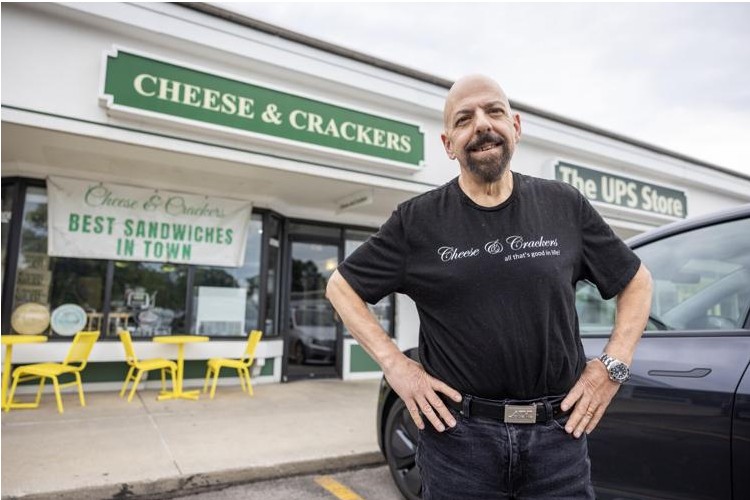
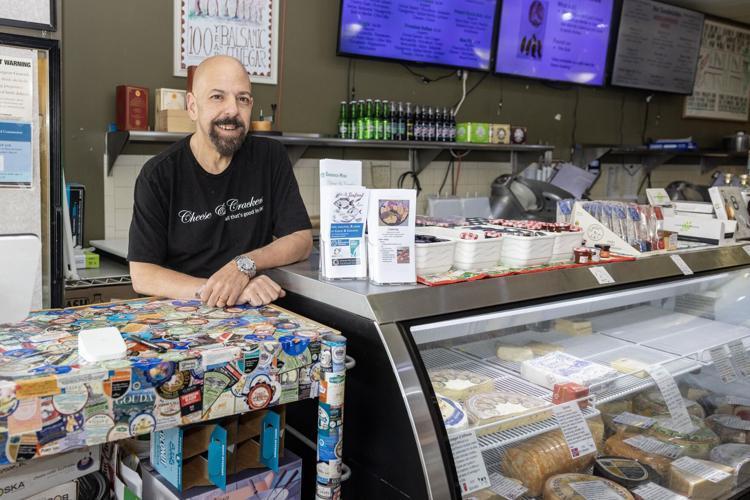
Sixteen years after opening day in Champaign’s Old Farm Shops, BART BASI still gets a daily dose of his favorite part about running a gourmet food business.
“Cheese & Crackers can be intimidating,” its owner says. “No matter your background, there’s probably something in the store you’ve never seen before, and our job is to make people comfortable enough to explore.
“One of my favorite things is talking with someone who wandered in and isn’t quite sure what they’re looking at. I’ll hand them a piece of cheese or salami they’ve never tried before and watch the expression on their face change from cautious to delighted.
“We get to bring people joy one small bite at a time, and I never get tired of seeing that happen.”
Basi’s son, then a local middle schooler and now a Carbondale attorney, gets credit for the name, which at first fit a store that offered top-shelf cheese, meats and chocolates. But Cheese & Crackers’ offerings expanded in the ensuing years — per the suggestion of Basi’s wife, Mindy, who he says “grounds me, challenges me and, perhaps most importantly, saves me from myself.”
The pride of Murphysboro, who also shares an Urbana home with two dogs and four cats, took time out to answer questions from Editor Jeff D’Alessio in the 340th installment of our weekly speed read spotlighting leaders of organizations big and small.
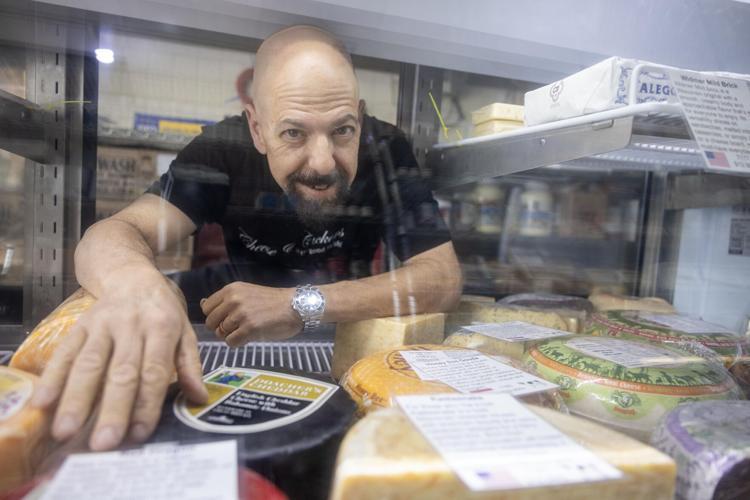
My professional role models are … my parents. They taught me that your first job is taking care of your family, and they expressed that through hard work and by creating wonderful experiences for the people they loved.
My mother, in particular, could turn even a simple sandwich into an occasion. Every meal was made with pride, skill and the belief that it was worth pausing and enjoying the moment.
From them, I learned that work without joy is pointless. They gave me a roadmap for life, a strong work ethic and a love of food that eventually led to Cheese & Crackers.
The three adjectives I hope my staff would use to describe me are … curious, passionate and fair.
I can’t live without my … wife. I was dead set against opening a cheese shop. I had a long list of reasons why it was a terrible idea. She ignored me.
One day, she wanted to add sandwiches. I patiently explained why that would never work. Sandwiches are now our second-best-selling category, and without them I’m not sure we would have survived COVID.
Then she decided a cheese shop should fly in fresh fish. Once again, I thought she was crazy. Once again, she was right.
This wonderfully eclectic business exists because she keeps pushing me beyond what I think is possible, and I’m a better husband, business owner and person because of it.
When it comes to my philosophy on meetings ... I’m easily distracted and have a tendency to metaphorically take a conversation down a rat hole, and I’ve learned how to watch out for that. I know how easy it is for a group to spend an hour chasing shiny objects.
So I like meetings with a purpose. Everyone gets an agenda beforehand, everyone gets a chance to speak, and by the end we should know exactly what decision we made and what happens next.
If we leave a meeting without moving the needle forward, we probably could have handled it with an email.
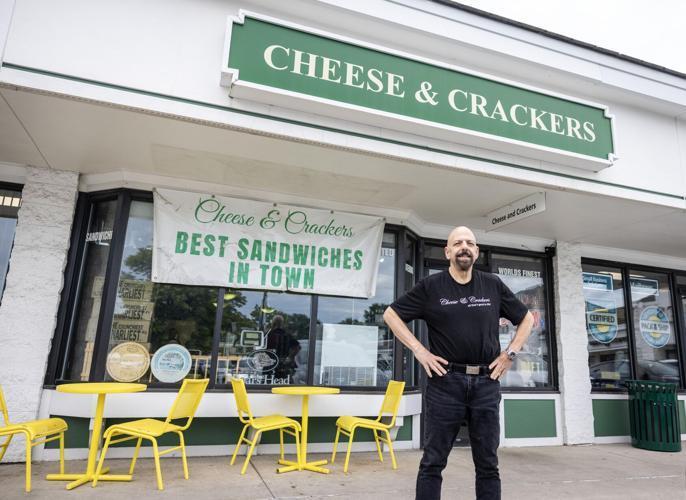
The hardest thing about being a leader is … getting the right people in the right roles and admitting when the fit isn’t right.
Early in my career, I’ve been in roles that looked perfect on paper but weren’t aligned with how I work. That experience changed how I look at hiring.
It’s easy to spot reasons someone doesn’t fit a role. The harder job is recognizing when you have someone with real integrity, curiosity and passion who isn’t working out and then figuring out how to reshape the role so they can succeed.
Some of the best people I’ve worked with didn’t start out in the “right” seat. They became invaluable once we adjusted expectations, responsibilities or structure to better match their strengths. Listen to these people when they are struggling, they will tell you the answers.
Leadership, for me, is less about finding perfect candidates and more about creating environments where good people can win.
On my office walls, you’ll find … memorabilia from my wife’s Ph.D. graduation from the University of Illinois — there’s a photo of my father putting her hood on — and our son’s law school graduation.
There are also various scouting items, including a Pinewood Derby car my son and I built, a sporting clays trophy he won; a couple of trophies my wife and I won with the Champaign County Sports Car Club.
On the bookshelf, there’s “Meditations” by Marcus Aurelius, “Gödel, Escher, Bach” by Douglas Hofstadter, “AI Engineering: Building Applications with Foundation Models” by Chip Huyen, and “Snow Crash” by Neal Stephenson.
I’m frugal in that … I drive a 2001 Chevy Avalanche that is literally held together with duct tape. Our favorite restaurant is Per Se and my wife still comes home excited when she finds discounted meat at the grocery store.
When we travel, our meals range from street food to three-star Michelin restaurants. We value memories.
If I could trade places for a week with any other business person in town, I wouldn’t mind switching with … Mike Clouse, the general manager at Bob’s Discount Furniture.
What interests me is how they’ve managed to grow in a category that has been heavily disrupted by online competition. I want to understand what specific decisions they’ve made around inventory, pricing and the in-store experience that allow a physical furniture business to remain competitive against what is essentially unlimited virtual inventory online.
That kind of adaptation is directly relevant to any brick-and-mortar business, including mine, and I’m always looking for ways to stay ahead.
My one unbreakable rule of the workplace is … have integrity. I need to be able to trust that the people I work with are honest in what they say and consistent in what they do, unbroken and undivided in their character.
Skills can be taught. Roles can be adjusted. If trust breaks down, nothing works.
I learned that lesson the hard way. I’ve had people with impressive experience who looked like perfect fits on paper but ultimately weren’t reliable when it came to follow-through. I’ve also worked with people who started with very little experience but proved themselves through consistency, honesty and effort who grew into indispensable team members.
Integrity is the one thing you can’t build a team without.
The single-most important question I ask job candidates during interviews is … tell me about a great meal you had. Some people describe something they cooked, or talk about a meal with friends/family, or recall something unexpected they tried while traveling.
What I’m really listening for isn’t the specific dish; it’s whether they can speak about food with curiosity, detail and genuine enthusiasm.
This is a hard job, and that question helps me understand whether someone will actually find joy in one of the best parts of it: exploring new food and sharing it with others.
The first thing I do when I get to work most days is … walk the store. I look at every space — refrigerators, freezers, cases, storage — and make sure I understand exactly what we have, where it is and whether it’s in good shape.
That daily walk tells me a lot about how the day is going to go. Then I check the numbers. Do the registers match expectations? Are the bank balances and transactions where they should be?
After that, I look at staffing to make sure we’ve got the right people scheduled for the workload we’re expecting that day.
By the time all of that is done, I usually know what needs attention immediately. Whether that’s low inventory from a busy night, or something that needs to be addressed.
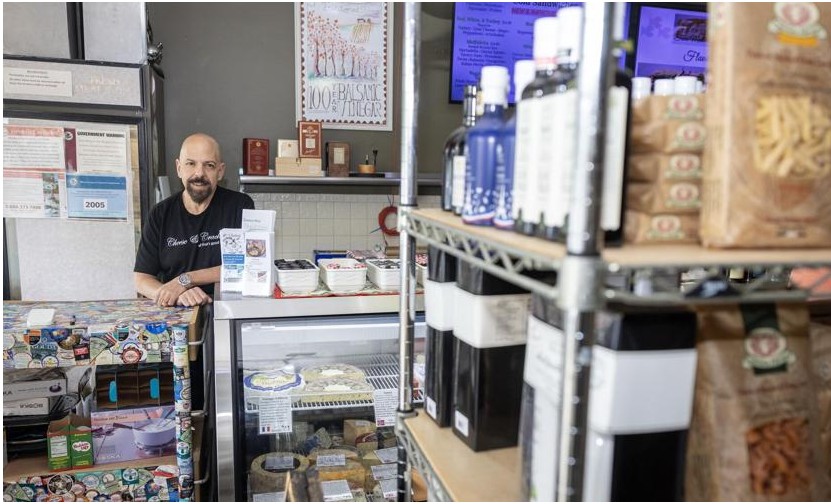
For lunch, I like to … use it as a chance to spend time with people.
A lot of my lunches are with friends I’ve known for over 20 years, people like Charles Walters, Randy Kangas and John Farney. We met through scouting when our kids were younger, and even though they’re mostly grown now, we still make time to get together when we can.
I also regularly meet up with professional colleagues like Mike Goebel and Mike Hartnett. These conversations help me stay connected to what other people are seeing and working through in their own businesses.
For me, lunch is less about where I eat and more about staying curious about people and maintaining those relationships over time.
I wind down after work by … staying current with developments in artificial intelligence and working on personal programming projects.
I follow a range of voices in the field. I’m interested in understanding where the technology is today, as opposed to yesterday, and what potential value I can find in new developments.
It’s a nice contrast to Cheese & Crackers, which is very hands-on and grounded in food, from classic techniques to emerging producers and trends in places like France and Spain. Shifting into AI and coding is how I reset. It pulls me into a completely different way of thinking.
The last luxury in which I indulged was ... dinner with my wife at Per Se. If we had to choose a favorite restaurant, it would be this one. We’ve been fortunate to dine there a few times, and every visit has been exceptional.
The experience is quiet and intimate, with a level of service that is personal and attentive in a way that’s hard to describe. It’s not just about the food, it’s the entire atmosphere and the sense of being completely present in the moment.
Experiences like that remind me how far beyond anything I ever imagined my life has taken me. I wake up every day grateful for where I am and for the people I get to share my life with.
The most beneficial college class I took was … Comparative Persian Literature with Professor Girdhari L. Tikku at the University of Illinois.
I signed up simply to fulfill a requirement. I had no real interest in the subject and knew almost nothing about it going in. What I ended up learning was not just the material, but the value of education for its own sake. Being exposed to ideas and perspectives I never would have sought out on my own.
More importantly, I met Richard Ohlund in that class. Years later, he became the best man at my wedding, and more than 30 years later we’re still close friends.
The last good book I read was … “On Eating: The Making and Unmaking of My Appetites” by Alicia Kennedy. I’m constantly drawn to stories about food and food history, but I find that a lot of writing in that space is either poorly researched or overly romanticized.
Kennedy does an excellent job balancing both — she’s an engaging storyteller while also being careful and precise with the history she’s presenting.
I’m up and at ’em every day by … 5 a.m. I start with a cup of coffee and a few minutes of local news and weather. From there, I’ll scan financial headlines on Bloomberg and check in on developments in AI, paying attention to what Andrej Karpathy has been talking about recently.
I use an AI agent that pulls together headlines across food, finance and AI, which I review briefly for anything worth deeper attention. By 6 a.m., I’m heading to the office.
My exercise routine consists of … purchasing a gym membership, and occasionally lifting a 90-pound wheel of Parmigiano-Reggiano. The truth is I enjoy working out, but I don’t make the time for it consistently. When I do get to the gym, I tend to focus on heavier weights, lower reps and few sets lifting to failure.
I also enjoy running, which is probably the most straightforward form of exercise for me when I can make time for it.
The first job I ever had was … delivering the The Southern Illinoisan in Jackson County.
I was 11 years old when I started with a small route of about 36 customers. Over time, I grew it to 55 by knocking on doors and picking up additional subscribers. When another carrier quit, I was asked to temporarily cover his route. I told my boss I didn’t want it temporarily I wanted it permanently. He thought it was too much for one kid, but eventually agreed, and I ended up running both routes.
By the time I was 16, I was delivering over 200 papers a day across multiple routes and I had started having other kids fold and deliver the papers. I failed to monitor the kids adequately and some of the kids were doing a really bad job of folding and/or delivering the papers.
The newspaper caught on and fired me. By then, I had already moved on to another job, so it all worked out.
The worst job I ever had was ... director of solution engineering at a fast-growing AI company where on paper, everything looked great.
The product was solid, I had a strong team of people working for me, and I reported directly to the CEO. It checked every box I cared about.
In hindsight, there were warning signs. I was the fourth person in the role in a relatively short period of time, the way decisions were communicated didn’t align from one conversation to the next. I kept telling myself those were things I could work through.
Over time, I realized it was a fundamental mismatch in how decisions were being made and communicated. Even with good intent on both sides, the working relationship wasn’t sustainable.
The biggest lesson I took from it was that when you see repeated patterns early, especially around communication and consistency you need to pay attention. Fit matters more than optics.
I knew this is what I wanted to do for a living … never.
There was never a plan. It’s always been about asking, “What would make this better?” and staying open to where the next opportunity might come from.
When my wife first suggested opening a cheese shop, I didn’t have any experience in retail.
I reached out to Jon and Russ Stewart from Super Pantry, guys I knew casually through our kids being in the same scout troop. I asked if they’d be willing to meet for coffee and give me some advice.
They proceeded to invite me into their office and spent a full day walking me through retail operations. It was incredibly generous, and the biggest lesson I learned wasn’t even retail operations, it was that most people are willing to help if you simply ask.
At the end of the conversation, one of them looked at me and said, “You’re not really selling cheese, are you?” I said yes. He shook his head and said, “Bart, we sell cheese at gas stations. You can’t make any money selling just cheese.”
We’ve been figuring it out ever since.